Introduction
Sales teams are the backbone of any business, but managing leads, tracking opportunities, and closing deals efficiently can be challenging without the right tools. Customer Relationship Management (CRM) software has revolutionized the way businesses manage sales processes, making it easier to track interactions, prioritize leads, and increase revenue.
By automating repetitive tasks, providing insights into customer behavior, and enabling better team collaboration, CRM empowers sales teams to focus on what matters most—building relationships and closing deals.
Section 1: What is CRM Software?
CRM software is a powerful tool that centralizes customer data, helping businesses manage relationships and streamline sales processes. It stores important information such as contact details, communication history, and purchase behavior, allowing sales teams to understand their leads better and nurture them effectively.
Modern CRMs also include features like workflow automation, advanced analytics, and integration with other business tools. These features help sales teams stay organized, reduce manual work, and make informed decisions that drive revenue growth.
Section 2: Key Sales Features of CRM Software
- Lead Management: Track leads from initial contact to conversion, ensuring timely follow-ups and nurturing.
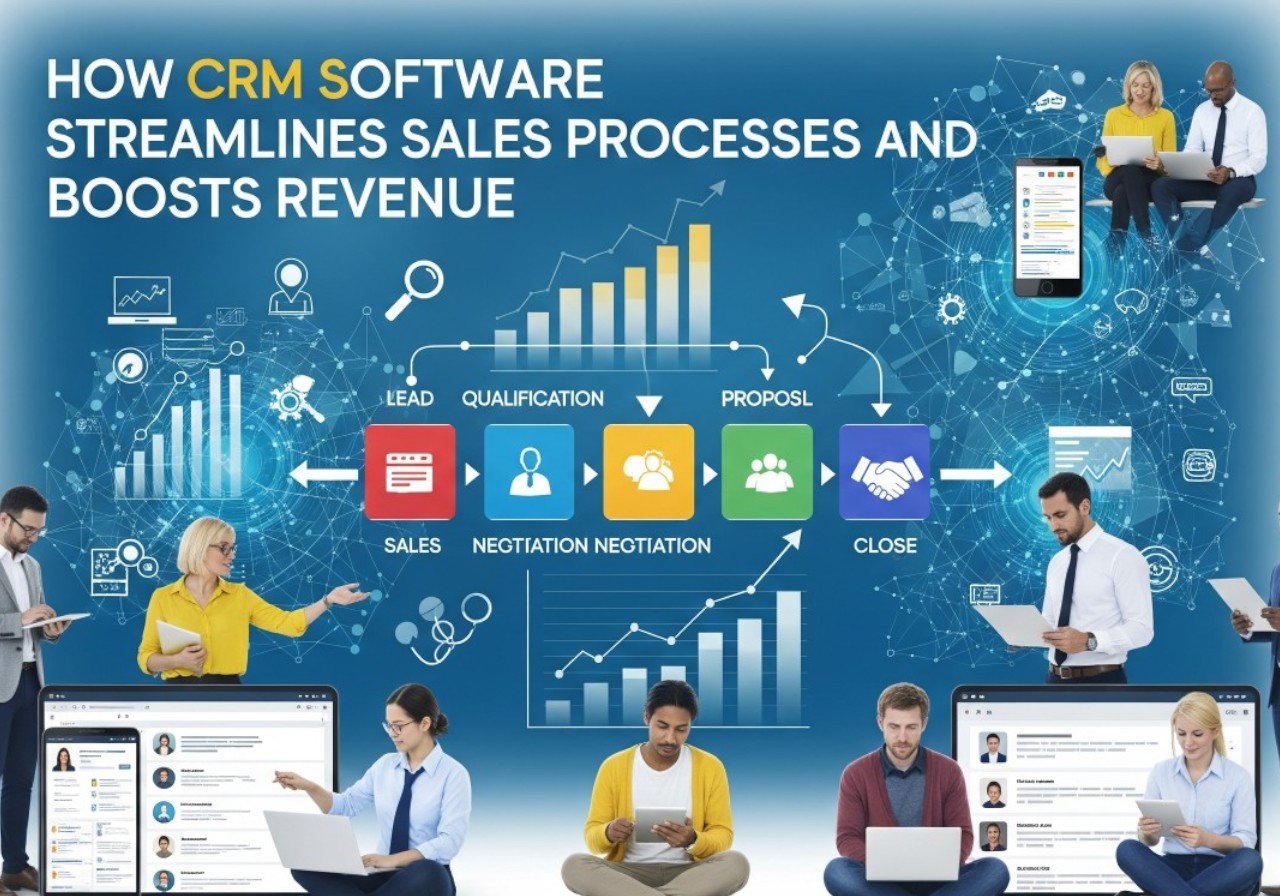
- Sales Pipeline Management: Visualize the sales process, prioritize opportunities, and identify bottlenecks.
- Automation of Tasks: Automate repetitive tasks such as follow-up emails, meeting reminders, and task assignments.
- Performance Analytics: Monitor individual and team performance, identify trends, and adjust strategies accordingly.
- Integration with Marketing Tools: Connect CRM with email campaigns, social media, and other tools to align sales and marketing efforts.
- Collaboration Features: Ensure that sales, marketing, and support teams work together efficiently with shared access to customer data.
Section 3: Real-Life Benefits for Sales Teams
CRM software has tangible benefits for businesses looking to boost sales:
- Improved Lead Conversion: By tracking and prioritizing leads, sales teams can focus on high-value prospects and increase conversion rates.
- Enhanced Customer Understanding: With access to complete customer history, salespeople can personalize communication and offer relevant solutions.
- Better Forecasting: Analytics help predict sales trends, plan resources, and set realistic targets.
- Higher Revenue: Organized processes, better lead management, and efficient follow-ups result in increased sales and revenue growth.
For instance, a B2B company can track client interactions over months, send timely proposals, and identify upselling opportunities, ultimately improving deal closure rates. Similarly, an e-commerce business can track abandoned carts and send personalized offers to recover lost sales.
Section 4: Tips for Maximizing Sales with CRM
- Define Your Sales Process: Map out each stage of your sales pipeline for clarity and consistency.
- Use Automation Smartly: Automate repetitive tasks without losing the personal touch in customer interactions.
- Regularly Update Data: Keep customer information accurate to avoid miscommunication and missed opportunities.
- Monitor KPIs: Track metrics like conversion rates, average deal size, and sales cycle duration for continuous improvement.
- Train Your Team: Ensure all users understand how to leverage the CRM’s features to maximize results.
Conclusion
CRM software is more than a tool—it’s a strategic partner for sales growth. By streamlining processes, providing actionable insights, and enabling better customer engagement, CRM helps businesses increase efficiency, close more deals, and boost revenue.
Companies that adopt CRM effectively empower their sales teams to work smarter, not harder, and create stronger, long-lasting relationships with customers. In today’s competitive landscape, CRM is essential for turning prospects into loyal clients and achieving sustainable business growth.